Decades
Prints by decade, 1860s to 1990s
14 decades of photographic technology, each with its own way of ageing. Find the decade your print came from and see what to expect.
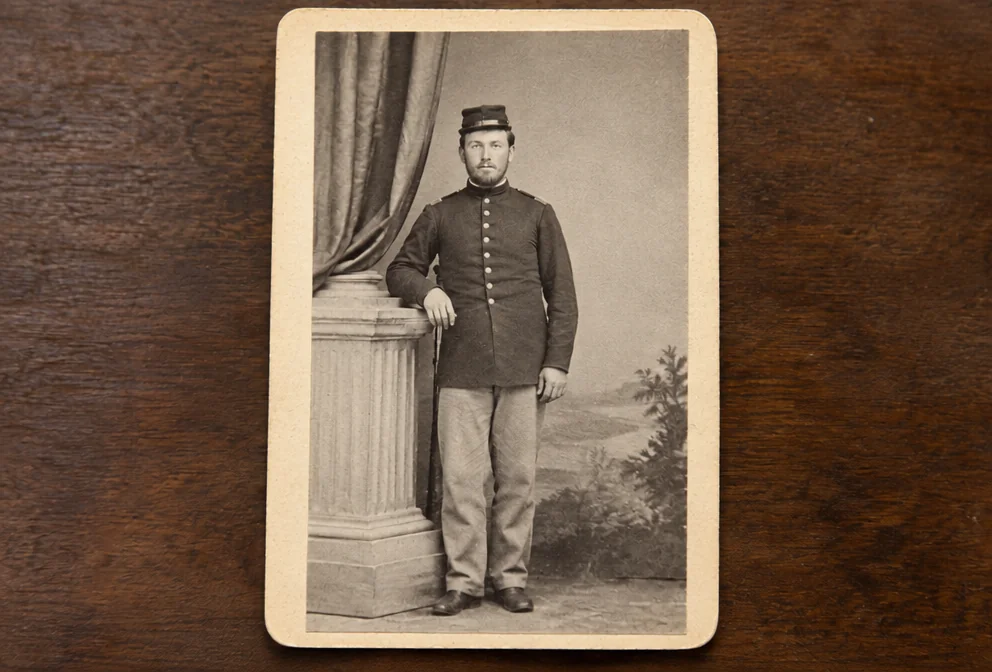
1860s
cartes de visite, tintypes, ambrotypes and the last daguerreotypesPrints from the 1860s show stiff, formal poses held for seconds, warm brown albumen tones, painted studio backdrops and a hand resting on a chair or a column for steadiness.
Open with these settings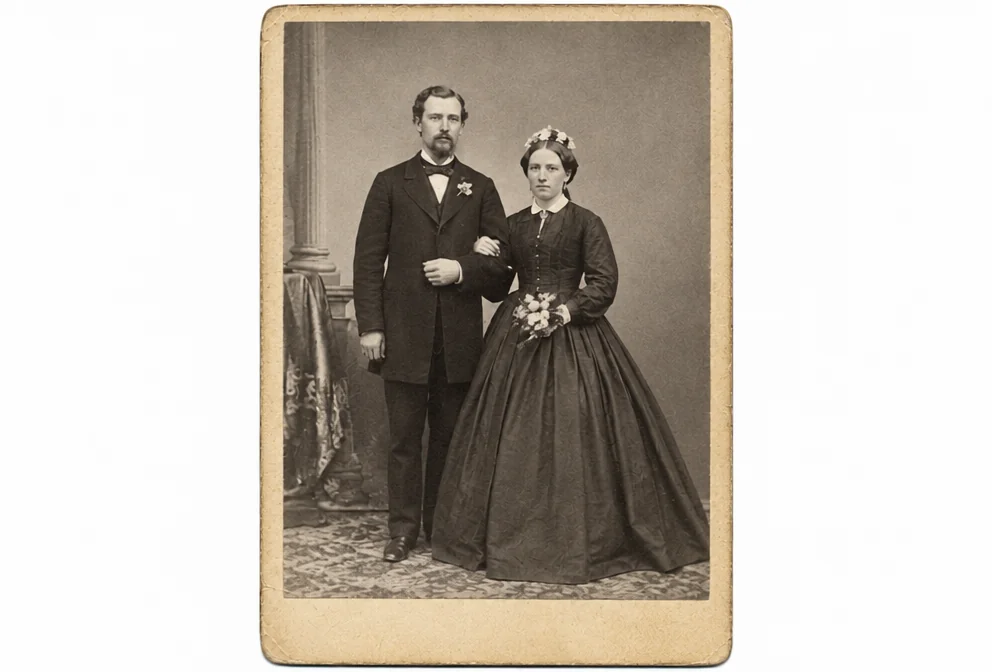
1870s
cabinet cards, cartes de visite and tintypesThe 1870s brought slightly more relaxed studio portraits, the arrival of the cabinet card, elaborate props and backdrops, and the first gelatin dry plates at the very end of the decade.
Open with these settings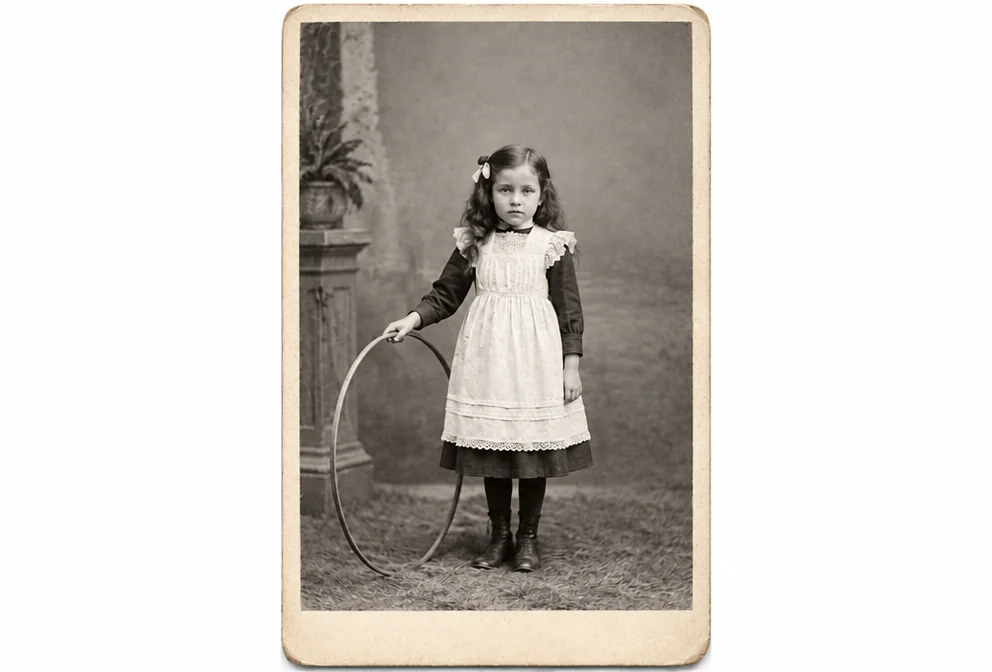
1880s
cabinet cards, tintypes and the first round Kodak roll-film prints from 1888In the 1880s dry plates and faster shutters let people hold a natural expression for the first time, and cabinet cards with gilt edges and ornate studio imprints filled the parlour.
Open with these settings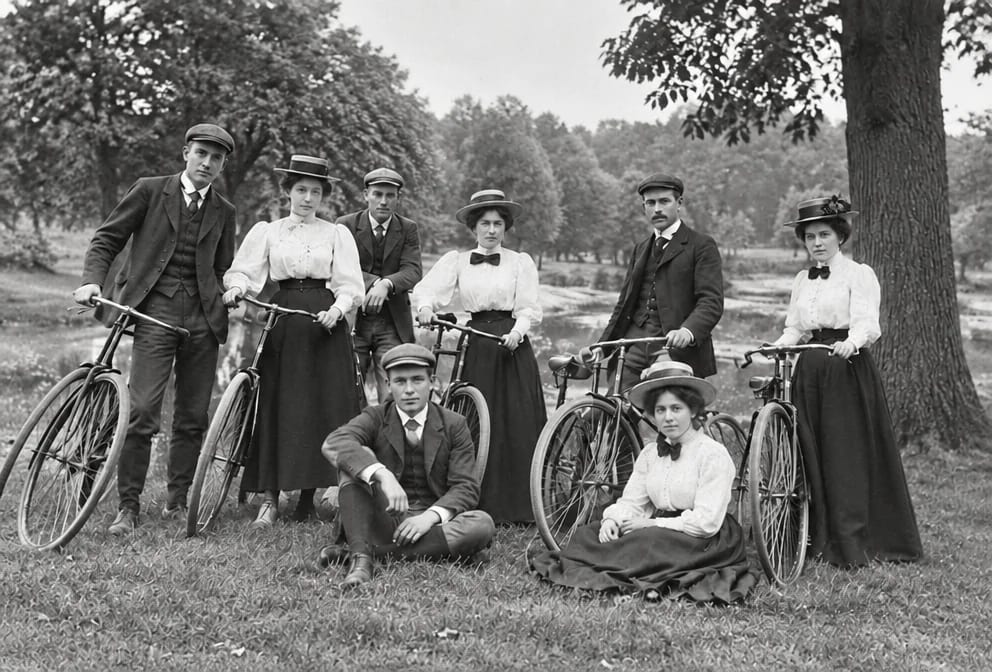
1890s
cabinet cards, cyanotypes and Kodak roll-film contact printsThe 1890s are where amateur snapshots begin: round and then rectangular Kodak prints of picnics, porches and bicycles, alongside the last formal cabinet cards.
Open with these settings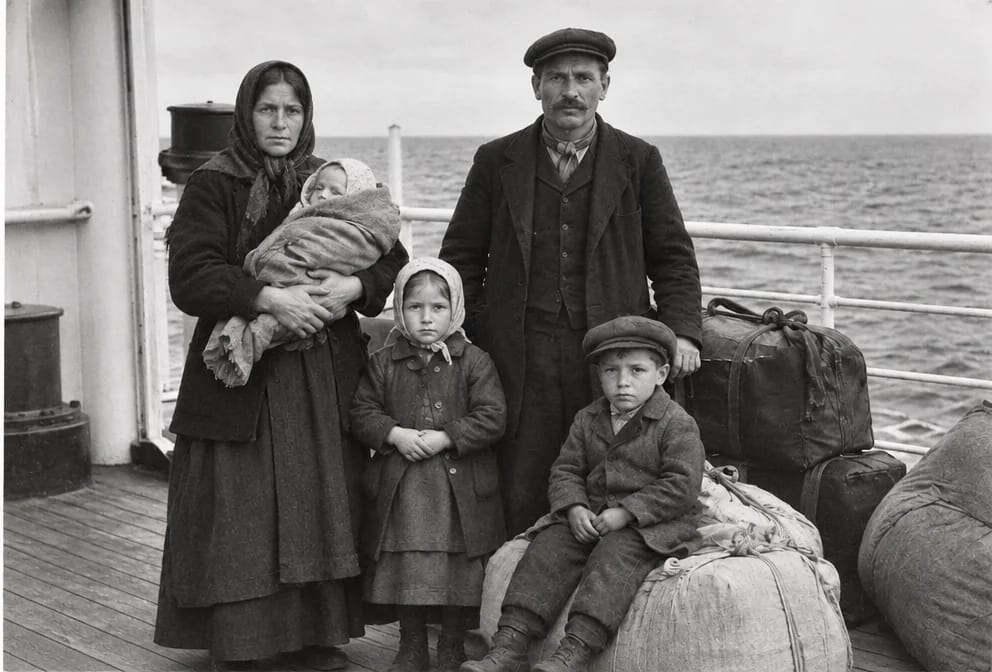
1900s
real photo postcards, Brownie contact prints and mounted studio portraitsThe 1900s are the Brownie decade: 2.25 in square snapshots, real photo postcards mailed across the country, and formal portraits still made on mounted card.
Open with these settings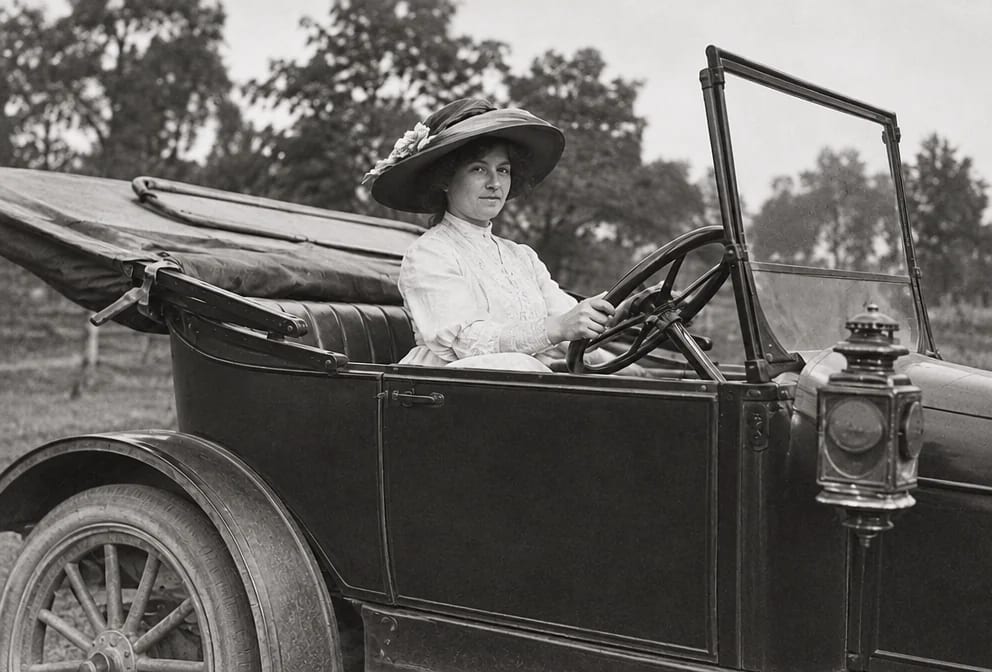
1910s
studio prints in paper folders, real photo postcards and vest-pocket contact printsThe 1910s left wartime and immigration portraits, sepia-toned studio prints in paper folders, and small snapshots with deckled edges beginning to appear.
Open with these settings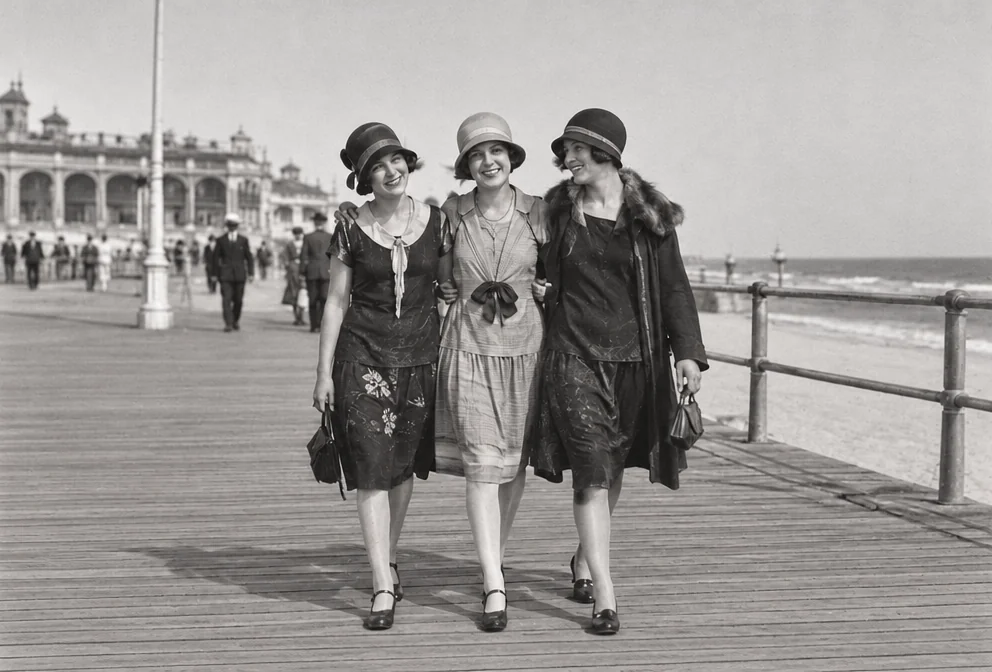
1920s
contact prints, panoramic group photos and studio portraits in foldersThe 1920s produced small contact prints with white borders and deckled edges, long panoramic school and group photos, and soft-focus pictorial portraits.
Open with these settings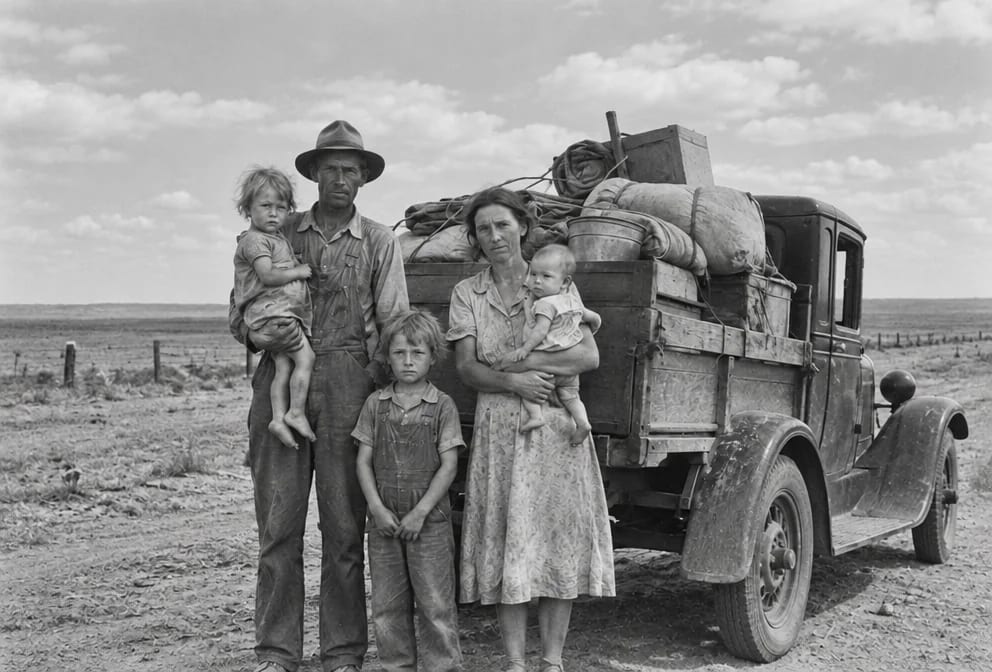
1930s
roll-film contact prints, studio portraits and early Kodachrome slidesThe 1930s gave families Depression-era snapshots on textured or silk-finish paper, 616 and 620 roll film, and from 1936 the first Kodachrome slides.
Open with these settings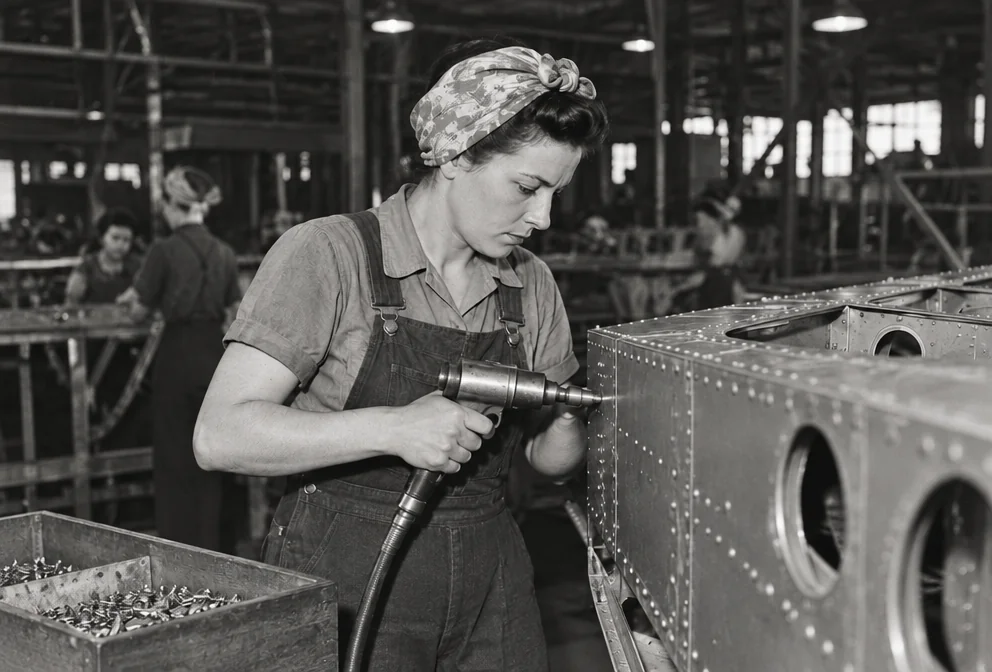
1940s
deckle-edged snapshots, wallet photos and hand-tinted studio portraitsThe 1940s are wartime prints with white borders, tiny wallet photos of servicemen, V-mail, and hand-colored studio portraits with pink cheeks.
Open with these settings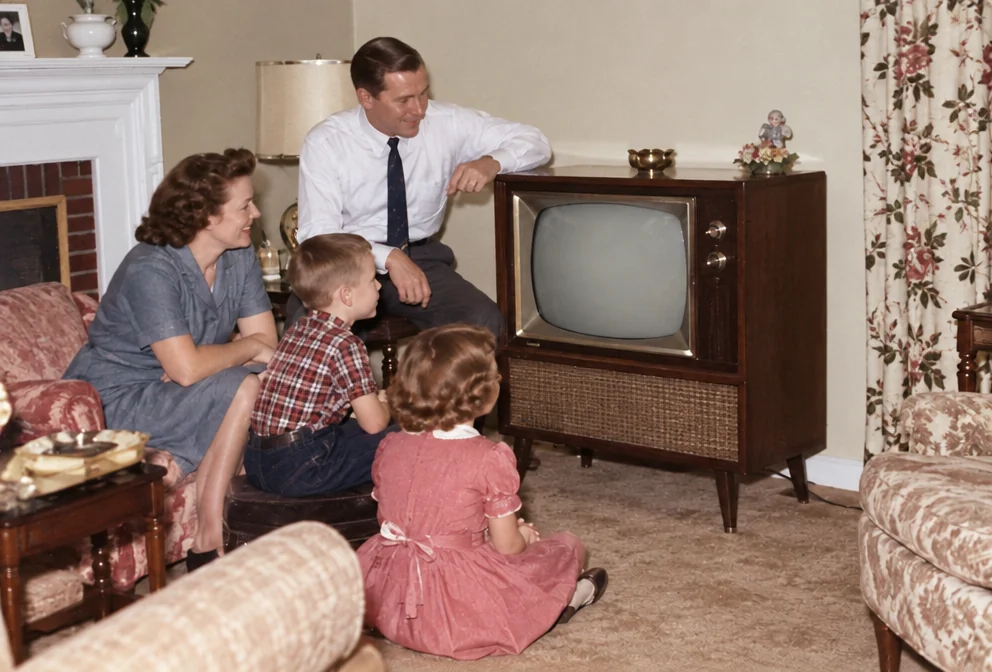
1950s
Kodacolor prints, Kodachrome slides and scalloped-edge black-and-white snapshotsThe 1950s put Kodacolor and Ektacolor prints in family hands, made slide evenings with Kodachrome a ritual, and kept square black-and-white snapshots with scalloped edges going.
Open with these settings
1960s
126 Instamatic prints, Polaroid peel-apart prints and Ektachrome slidesThe 1960s belong to the Instamatic: square 126 prints, Polaroid pack film, brighter color, and the last generation of black-and-white family snapshots.
Open with these settings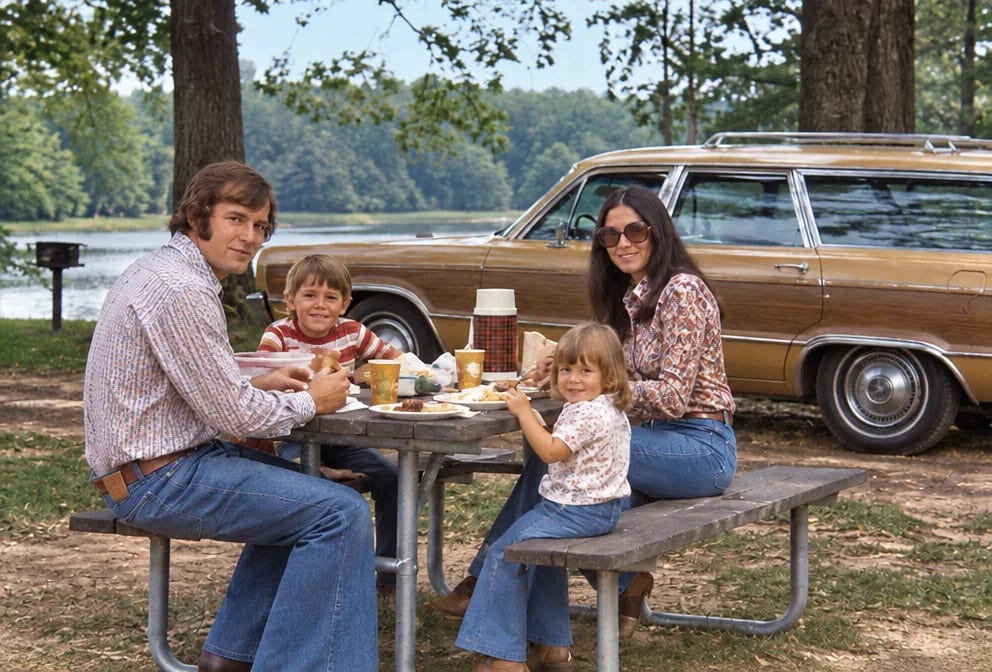
1970s
square color prints with rounded corners, SX-70 Polaroids, 110 prints and magnetic albumsThe 1970s are rounded-corner square prints with the warm golden cast of the decade's paper, SX-70 Polaroids, 110 pocket cameras and the first magnetic albums.
Open with these settings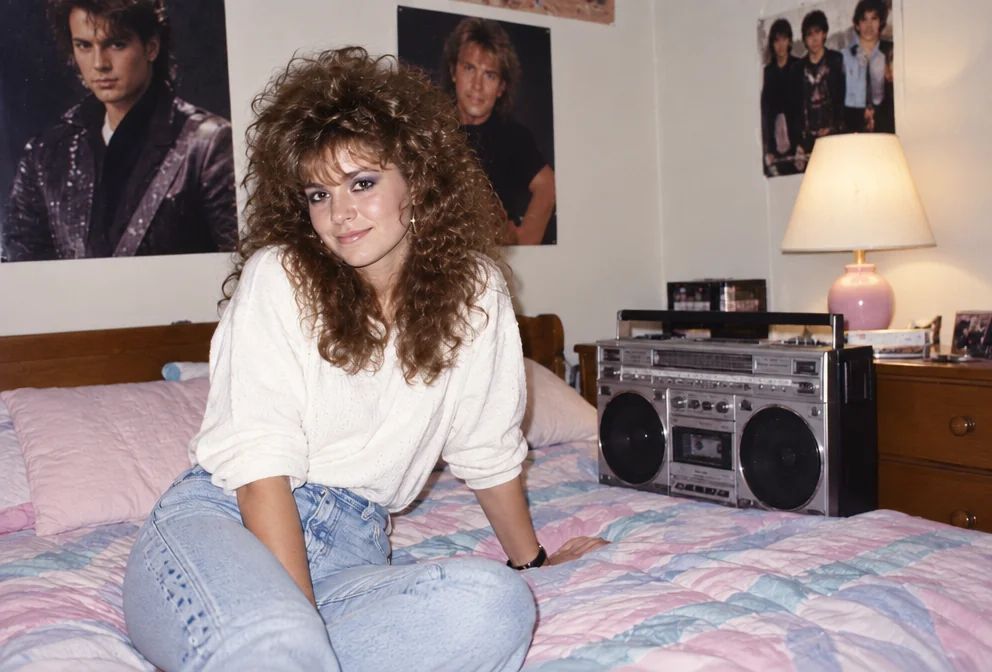
1980s
4 x 6 and 3.5 x 5 color prints, Polaroid 600 prints, disc and 110 printsThe 1980s are 4 x 6 one-hour prints with glossy finishes, on-camera flash red-eye in every indoor shot, 600-series Polaroids and disc cameras.
Open with these settings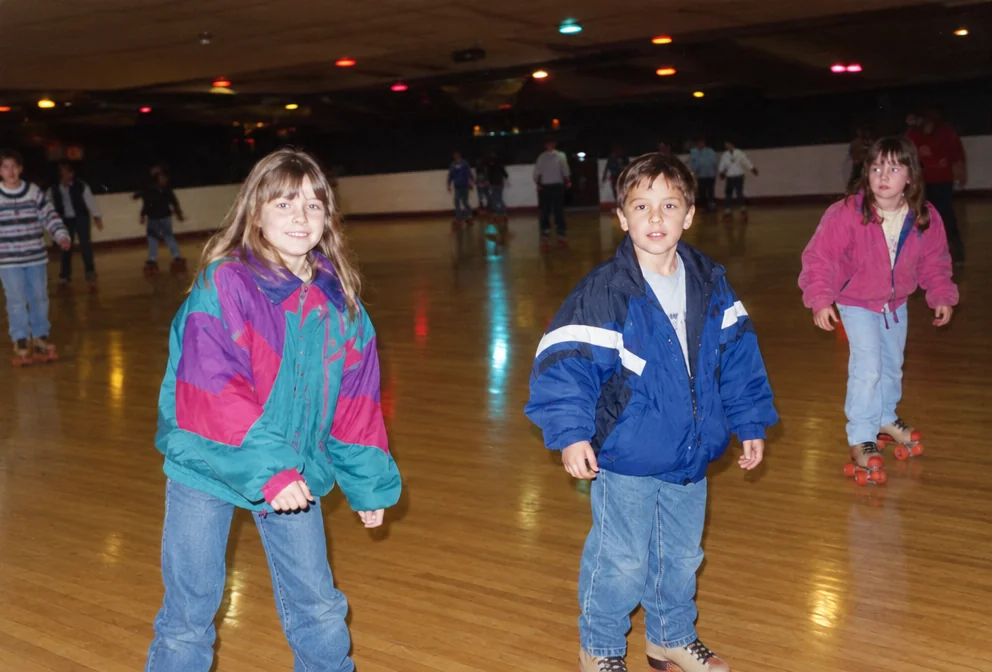
1990s
35 mm and APS one-hour prints, disposable camera prints and late PolaroidsThe 1990s are disposable cameras, orange date stamps in the corner, APS film and the last decade before digital took over the family album.
Open with these settings