Decades
Restore photos from the 1910s
The 1910s left wartime and immigration portraits, sepia-toned studio prints in paper folders, and small snapshots with deckled edges beginning to appear. The common formats of the 1910s were studio prints in paper folders, real photo postcards and vest-pocket contact prints.
The folders of the 1910s trap acid against the print, sepia drifts to a muddy brown, and prints carried through the war are folded, stained and worn. A good flat scan of the 1910s print is the starting point; everything after that happens on the file, and the print is not touched again.
For 1910s photographs the AI-powered restoration returns a result in seconds, and Pro or Max recovers more texture for a large reprint. Start with Scratch & Tear Repair and compare any rebuilt 1910s faces against other pictures of the same people.
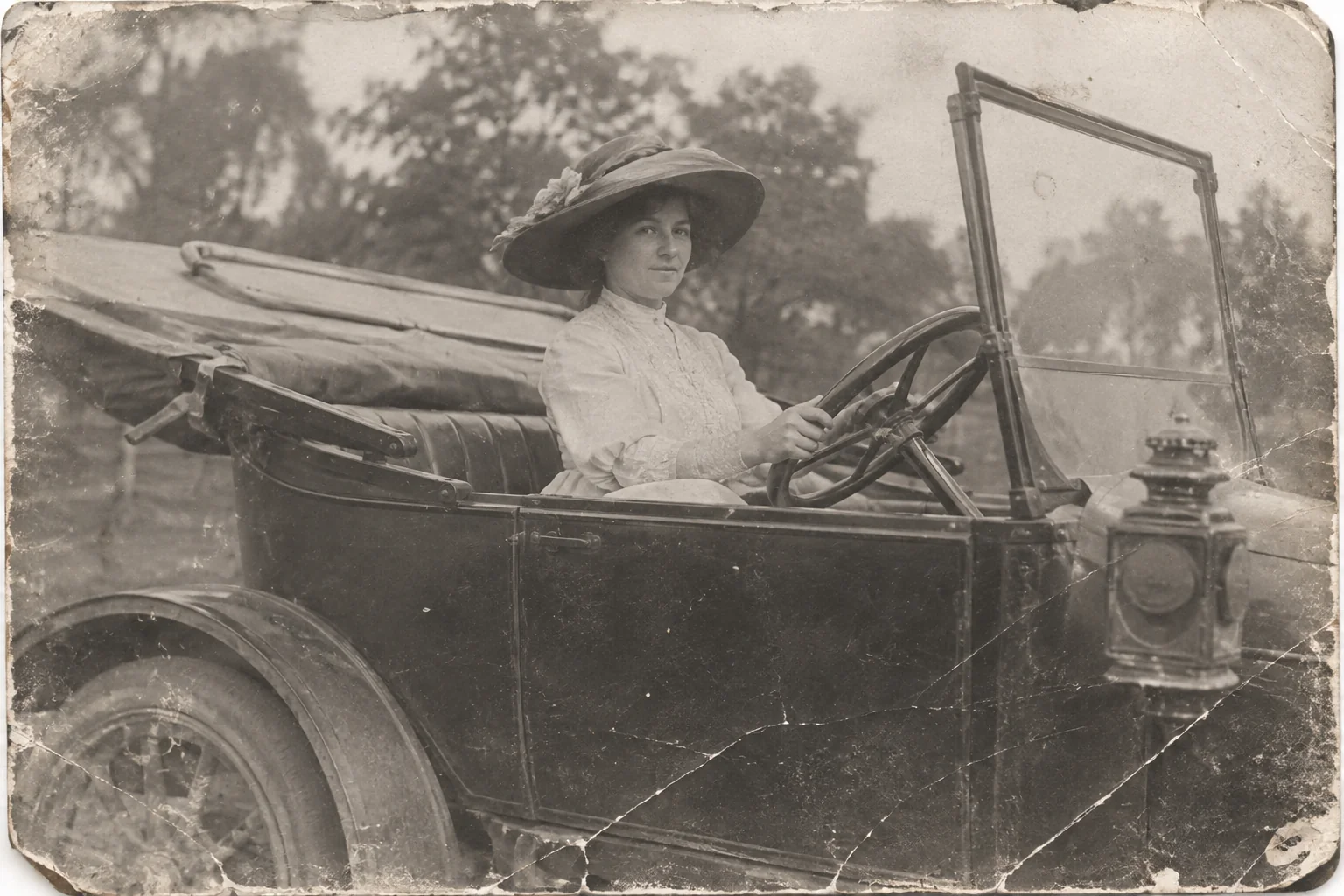
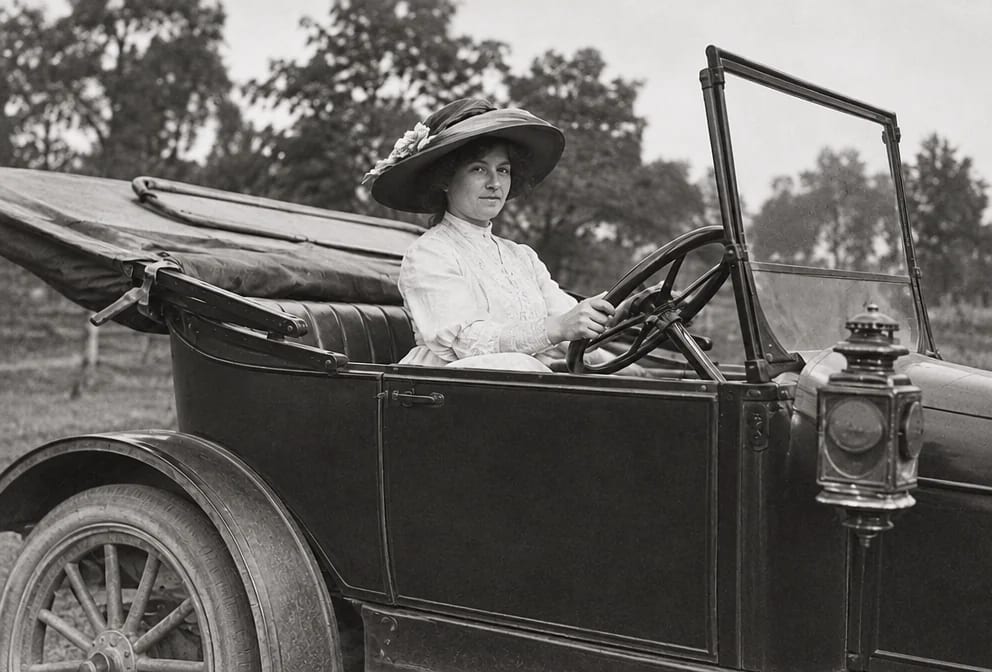
Original on the left, restored on the right; hover to see more of the repair. Made in the Studio from a scan of the print.
Print and file requirements
| Requirement | Detail |
|---|---|
| Dominant process | Roll film and sheet film; gelatin silver prints |
| Common formats | Studio portrait in a folder, real photo postcard, contact print |
| Color | Monochrome; sepia and warm-toned |
| Cameras | Vest Pocket Kodak (1912), Autographic Kodak (1914) |
| Typical size | 1.6 x 2.5 in vest-pocket print; 3.5 x 5.5 in postcard |
| Typical condition today | Folded, stained, worn, acid burn from folders |
What matters for these photos
- Folded, stained, worn, acid burn from folders on 1910s prints
- Faces in 1910s group and studio photos that are too small to enlarge
- 1910s tones drifted to brown or yellow, with the whites gone
- A single 1910s print that is the family's only copy, with no negative to go back to
Suggested order of passes
- 01
Run Scratch & Tear Repair on the 1910s scan
Targets the most common failure of 1910s prints: folded, stained, worn, acid burn from folders.
Scratch & Tear Repair - 02
Repair the marks left on the 1910s print
A second pass for the scratches, creases and fading that 1910s prints usually carry together.
Photo Restoration - 03
Restore the faces
1910s faces are often small; natural strength keeps them soft and believable, strong rebuilds tiny ones.
Face Restoration - 04
Upscale for reprinting
1.6 x 2.5 in vest-pocket print; 3.5 x 5.5 in postcard is small for a frame; the upscaler adds the pixels with the 1910s shape unchanged.
Image Upscaler
Questions
Related guides