Formats
Tintype & Daguerreotype Restoration
Clear tarnish, silvering and glass cracks from a nineteenth-century plate
4 free credits to start, enough for one Standard pass of this tool.
- 1Upload a photo of the plate taken in soft light with no flash
- 2Choose to keep the antique look or present it as a clean print
- 3Download the restored portrait, then sharpen the face if you wish
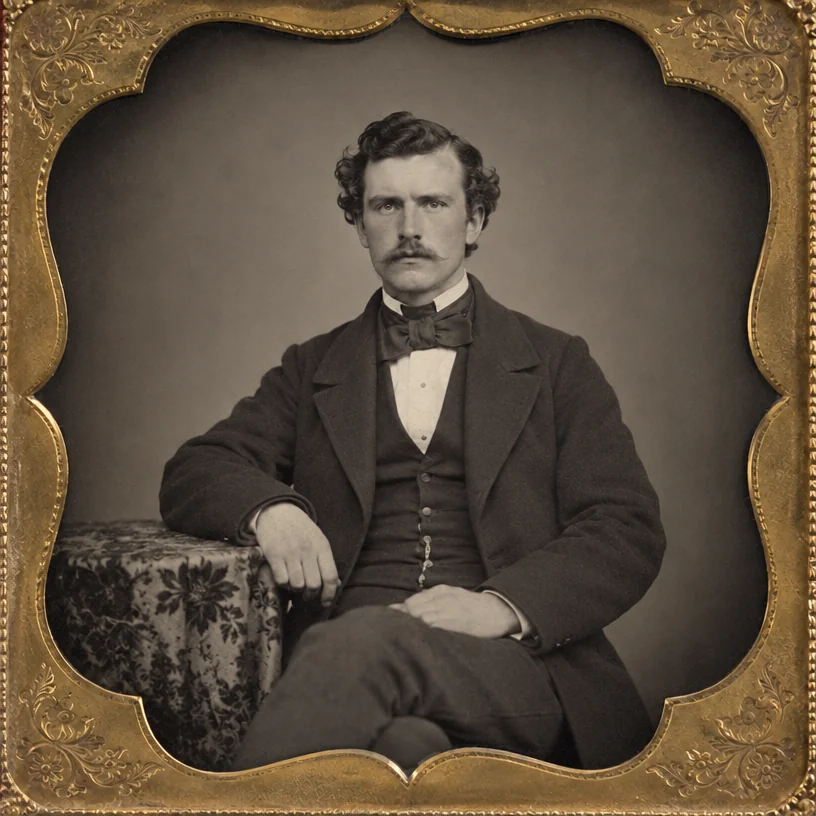
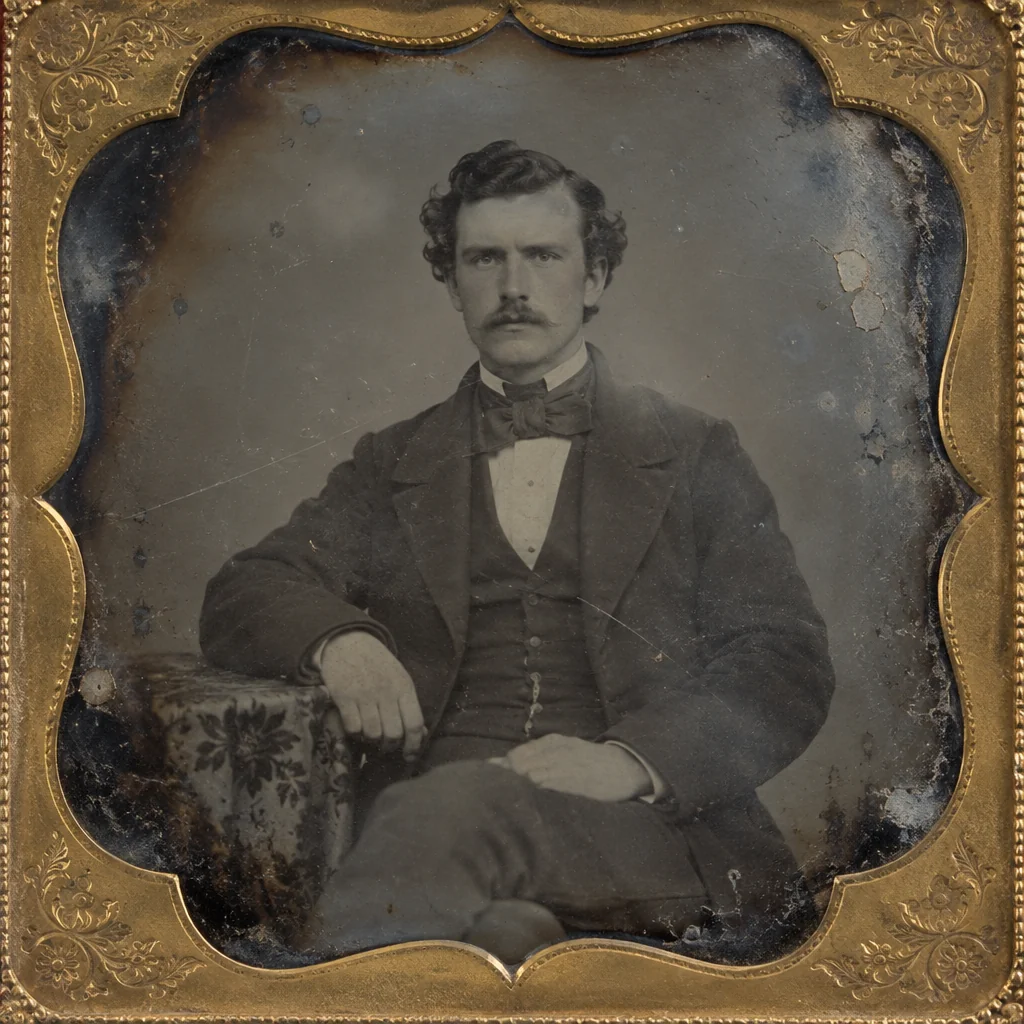
Restored by this tool from the original. Drag the handle to compare before and after.
The oldest photographs in a family are not on paper at all. A daguerreotype is an image on a silvered copper plate, sealed under glass in a small hinged case, and it has to be tilted to be seen at all. A tintype is a thin sheet of lacquered iron, cheap and durable, sold at fairs and by traveling photographers through the second half of the nineteenth century. An ambrotype is a glass negative backed with black to read as a positive. All three age in their own ways: the silver tarnishes in rings and clouds, the lacquer flakes, the glass cracks, the edges mirror the room. This tool is written for those specific problems. It removes tarnish, silvering, scratches, dust and glass cracks, recovers the highlights and shadow detail that the reflections were hiding, and corrects the mirror-like glare.
The Finish select decides what the result should be. Keep the antique plate look preserves the character of the object: its particular tonality, the vignetting toward the edges, the soft corners, and the brass mat or case frame if it is in the picture. This is the choice for an archive, or for anyone who wants the plate to still look like a plate. Clean modern print presents the image as a neutral black-and-white photograph without the plate artifacts, mat or frame, which is what you want if the portrait is going on a wall or into a family tree beside later photographs. Either finish keeps the sitter as photographed, including the stiff pose and the unsmiling expression that long exposures required.
Photographing a plate is the hard part. Set it on a dark cloth, angle it until the image reads as a positive rather than a mirror, and use soft, indirect light with no flash. A daguerreotype under glass should be photographed through the glass rather than opened. Results come back in seconds; a Face Restoration pass afterwards is often worthwhile, since these are frequently the only likeness of the person that exists. Tintypes were often reversed left to right by the process itself, so a sitter who parted his hair on the left may appear to part it on the right. The AI does not flip the image, since it cannot know which is true, and it is worth mentioning if you want the reversal corrected in the Describe the Repair tool.
Credits per pass
| Tier | Credits | Good for |
|---|---|---|
| Standard | 4 | The print at screen size, quick repairs |
| Pro | 12 | More of the scan is sent, finer faces and texture |
| Max | 44 | The full scan, every readable detail kept for print |
What you can tell it
- Photo of the plate
- FinishKeep the antique plate lookClean modern print
- Result · Same ratio as the original
In the Studio
- Pass the result into any other tool without uploading again
- Standard, Pro and Max tiers, with the cost shown before you run
- Every restoration kept in your library beside its original
- Upscale to 32 MP for framing, or make a short moving version
About this tool
Often used next
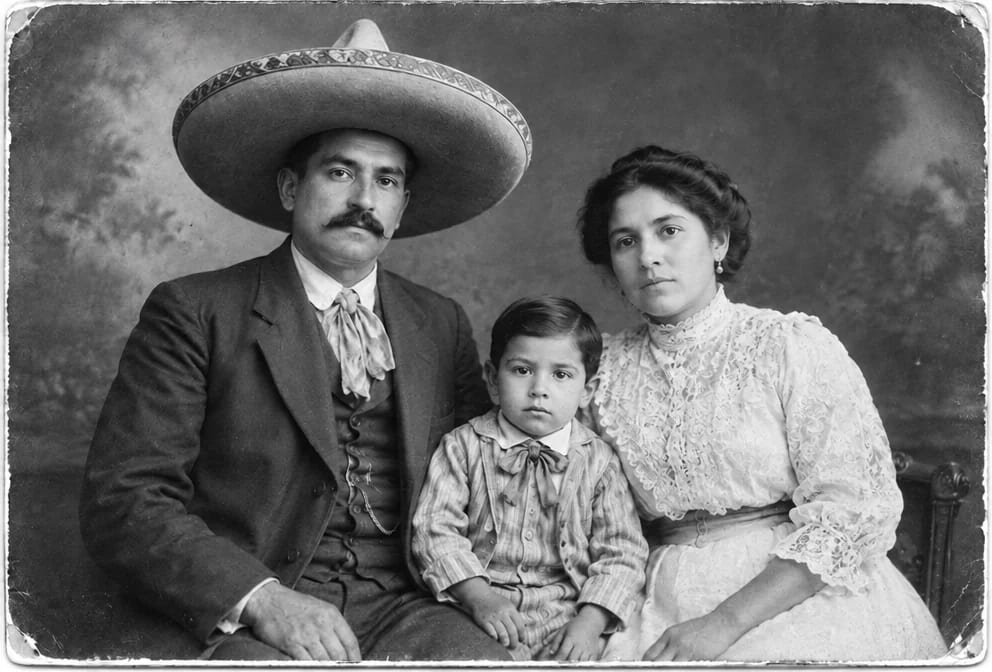
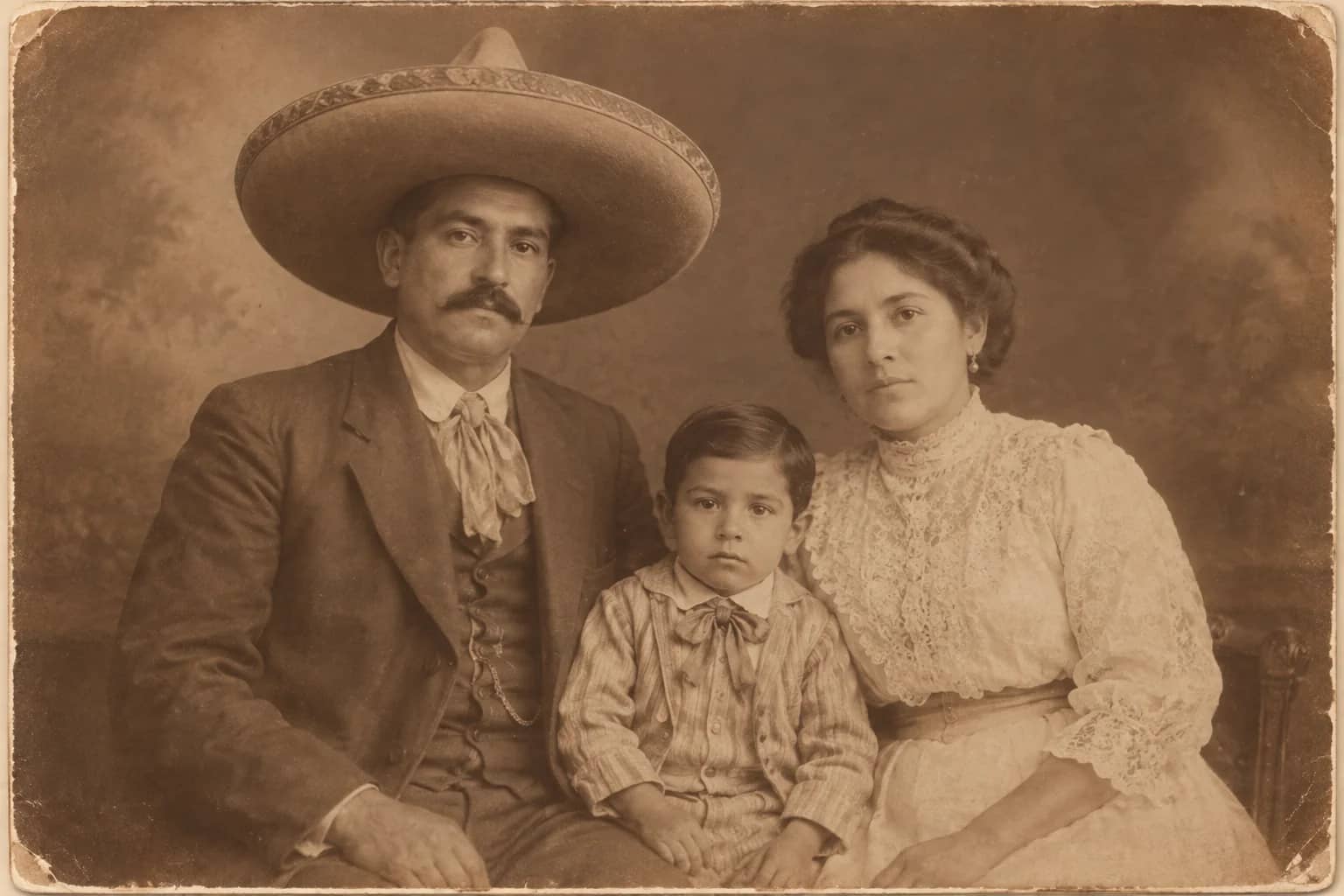
Sepia to Black & White
Take the brown out of a sepia print and give it a full-range monochrome tone
Face Restoration
Recover eyes, skin and hair in soft or tiny faces while keeping the person
Photo-of-a-Photo Fixer
Turn a phone snap of a print into a flat, square, glare-free copy
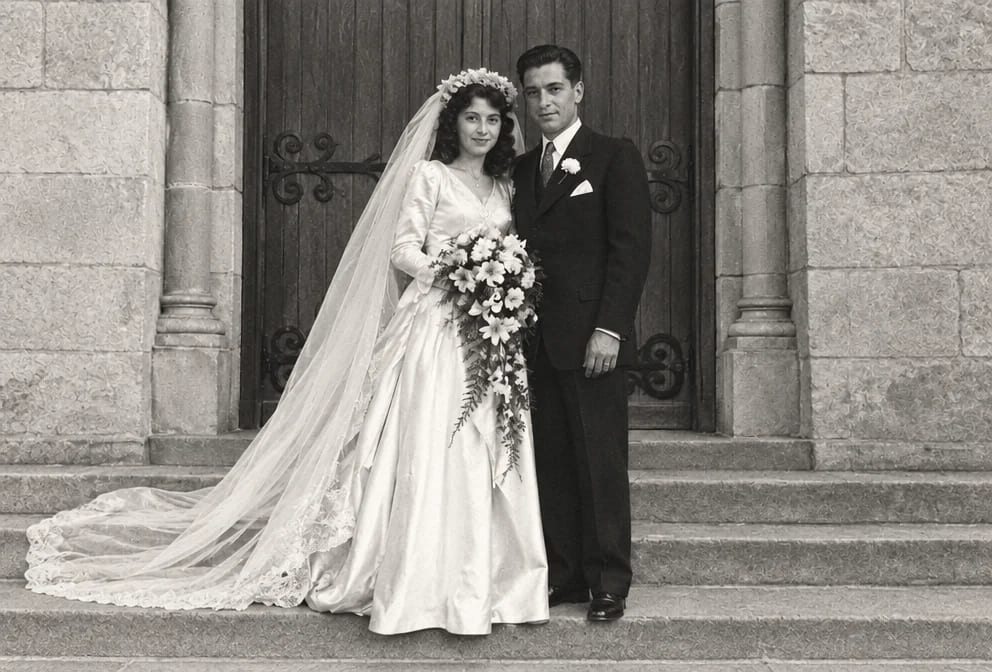
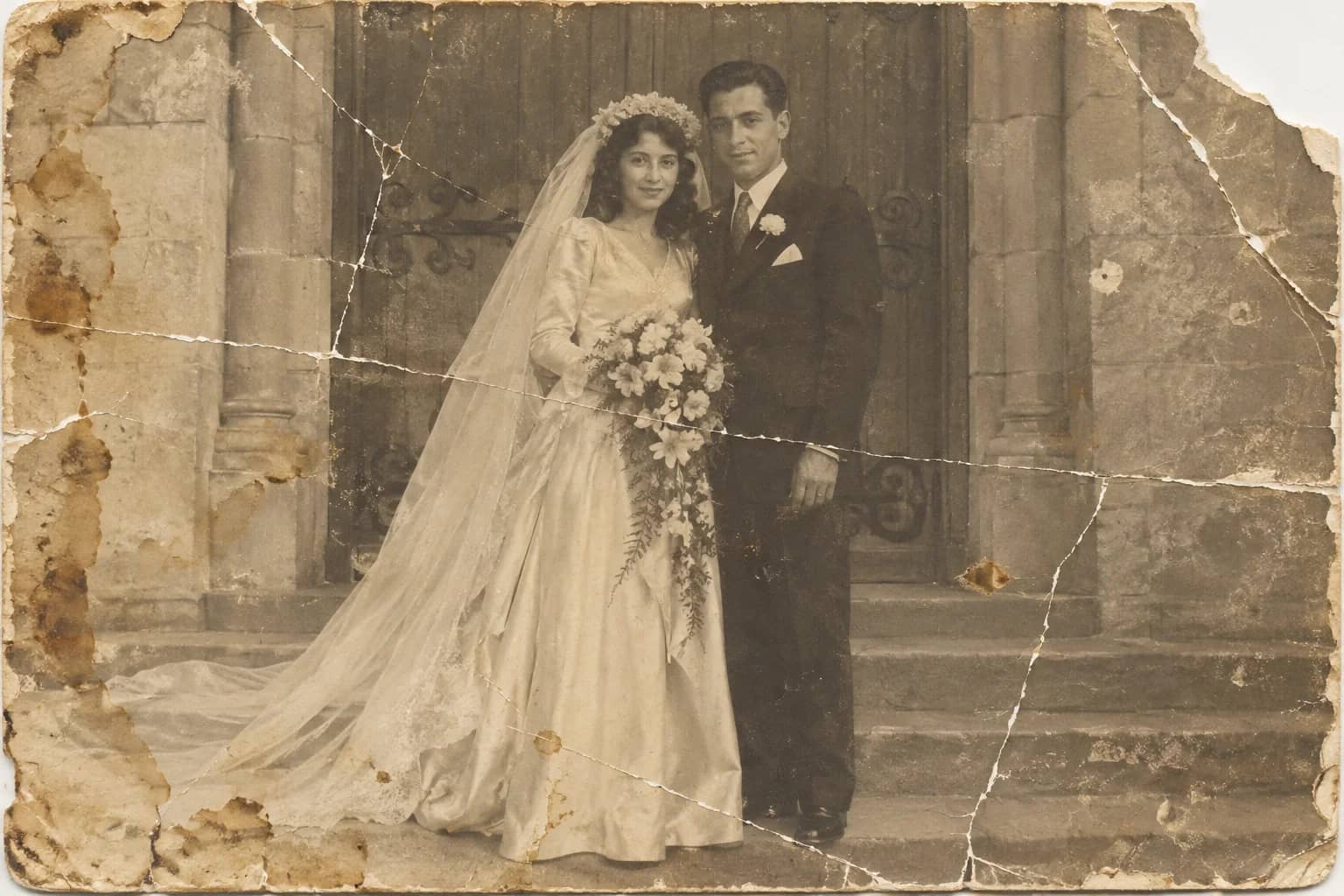
Photo Restoration
One pass that repairs damage, lifts fading and sharpens faces in an old photo