Decades
Restore photos from the 1860s
Prints from the 1860s show stiff, formal poses held for seconds, warm brown albumen tones, painted studio backdrops and a hand resting on a chair or a column for steadiness. The common formats of the 1860s were cartes de visite, tintypes, ambrotypes and the last daguerreotypes.
Albumen prints from the 1860s fade to pale yellow-brown, tintypes rust and craze, cased images tarnish inward from the edges and the thin card mounts curl. Scan 1860s prints once at a high resolution, by the edges, and let the restoration work on the copy.
Tintype & Daguerreotype Restoration is the usual first tool for a 1860s print, then Face Restoration and the upscaler in the Studio if it is going into a frame. The 4 free credits on a new account cover one Standard restoration of a 1860s photo.
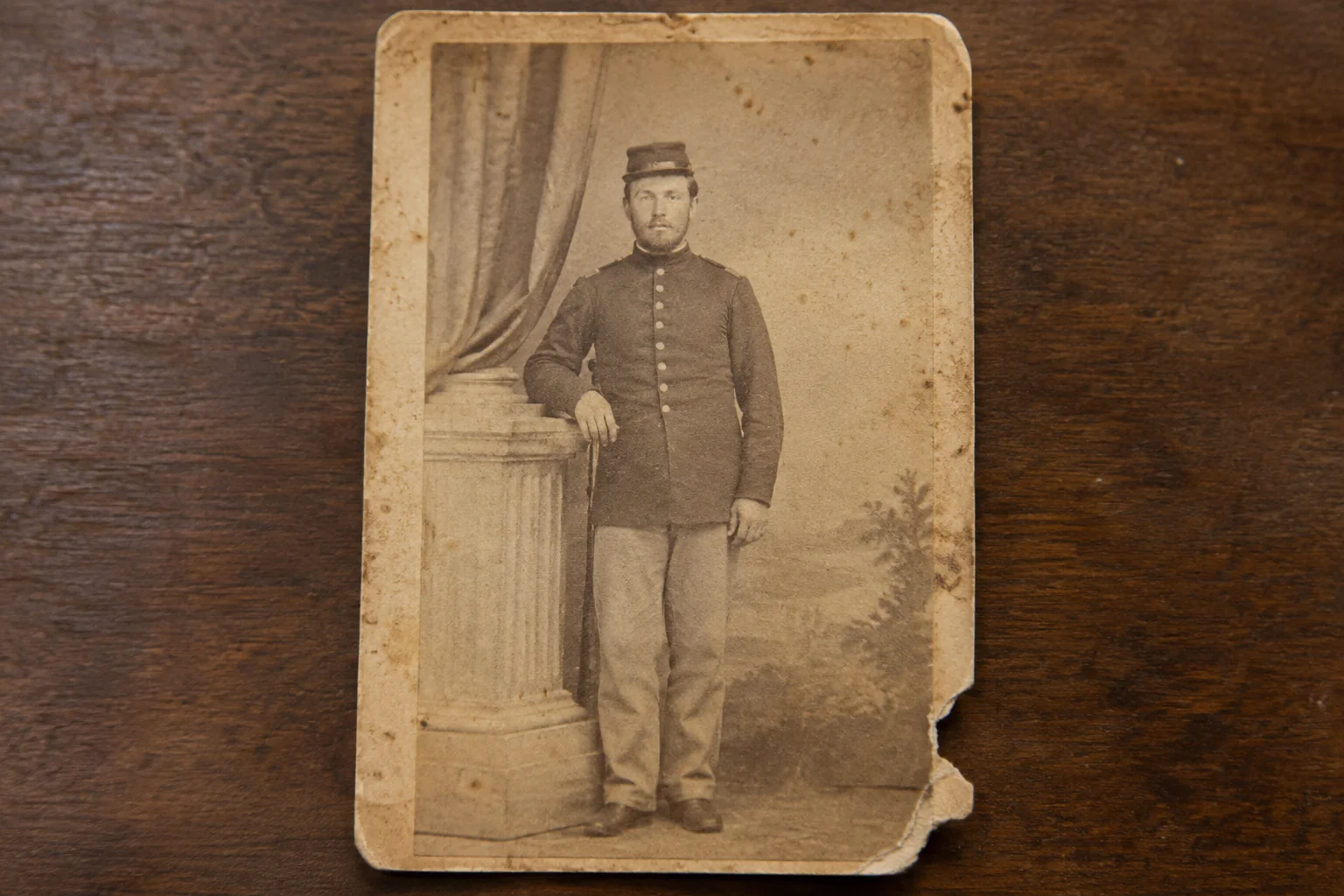
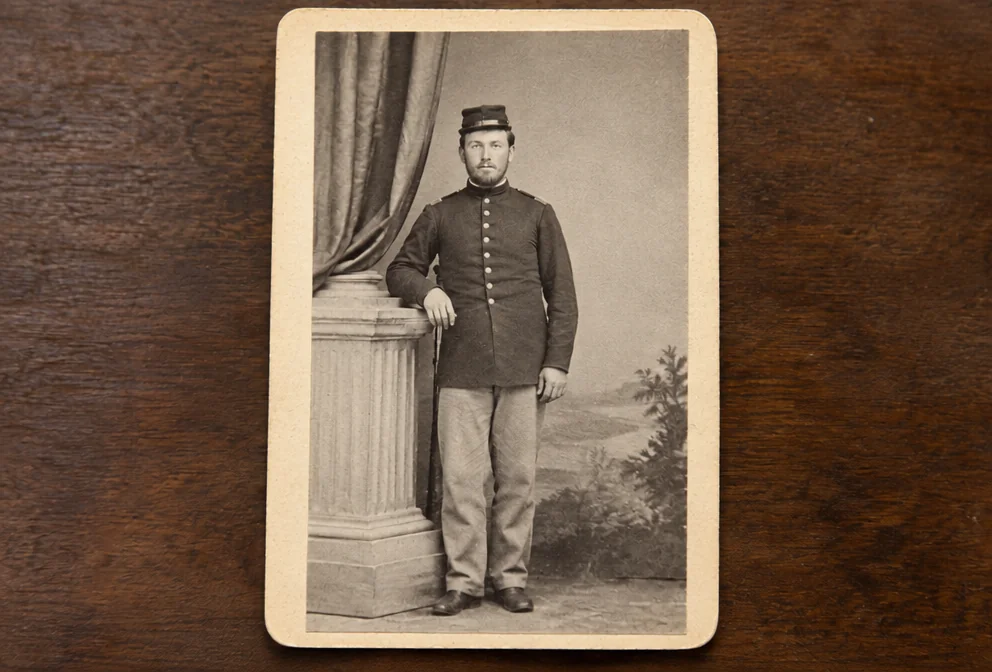
Original on the left, restored on the right; hover to see more of the repair. Made in the Studio from a scan of the print.
Print and file requirements
| Requirement | Detail |
|---|---|
| Dominant process | Wet collodion glass negatives; albumen prints; tintypes |
| Common formats | Carte de visite, tintype, ambrotype, stereograph |
| Color | Monochrome, warm brown; hand-tinted cheeks and jewelry |
| Exposure time | Several seconds, with head rests and braces behind the sitter |
| Typical size | 2.5 x 4 in carte; 2.75 x 3.25 in sixth-plate |
| Typical condition today | Faded to pale brown, yellowed, rubbed corners, rusted or crazed plates |
What matters for these photos
- Faded to pale brown, yellowed, rubbed corners, rusted or crazed plates on 1860s prints
- Faces in 1860s group and studio photos that are too small to enlarge
- 1860s tones drifted to brown or yellow, with the whites gone
- A single 1860s print that is the family's only copy, with no negative to go back to
Suggested order of passes
- 01
Run Tintype & Daguerreotype Restoration on the 1860s scan
Targets the most common failure of 1860s prints: faded to pale brown, yellowed, rubbed corners, rusted or crazed plates.
Tintype & Daguerreotype Restoration - 02
Repair the marks left on the 1860s print
A second pass for the scratches, creases and fading that 1860s prints usually carry together.
Photo Restoration - 03
Restore the faces
1860s faces are often small; natural strength keeps them soft and believable, strong rebuilds tiny ones.
Face Restoration - 04
Upscale for reprinting
2.5 x 4 in carte; 2.75 x 3.25 in sixth-plate is small for a frame; the upscaler adds the pixels with the 1860s shape unchanged.
Image Upscaler
Questions
Related guides