Decades
Restore photos from the 1930s
The 1930s gave families Depression-era snapshots on textured or silk-finish paper, 616 and 620 roll film, and from 1936 the first Kodachrome slides. The common formats of the 1930s were roll-film contact prints, studio portraits and early Kodachrome slides.
Silk-textured 1930s papers scan with a mesh pattern, prints in black-paper albums were glued down, and early Kodachrome has faded unevenly. None of that damage can be undone on a 1930s print itself, so the repair happens on a scan and the original goes back into a cool, dry box.
Run Grain & Noise Remover on the 1930s scan first, then chain whatever the print still needs: scratches, stains, faces, grain. Output follows the shape of the upload, so a 1930s print keeps its proportions.
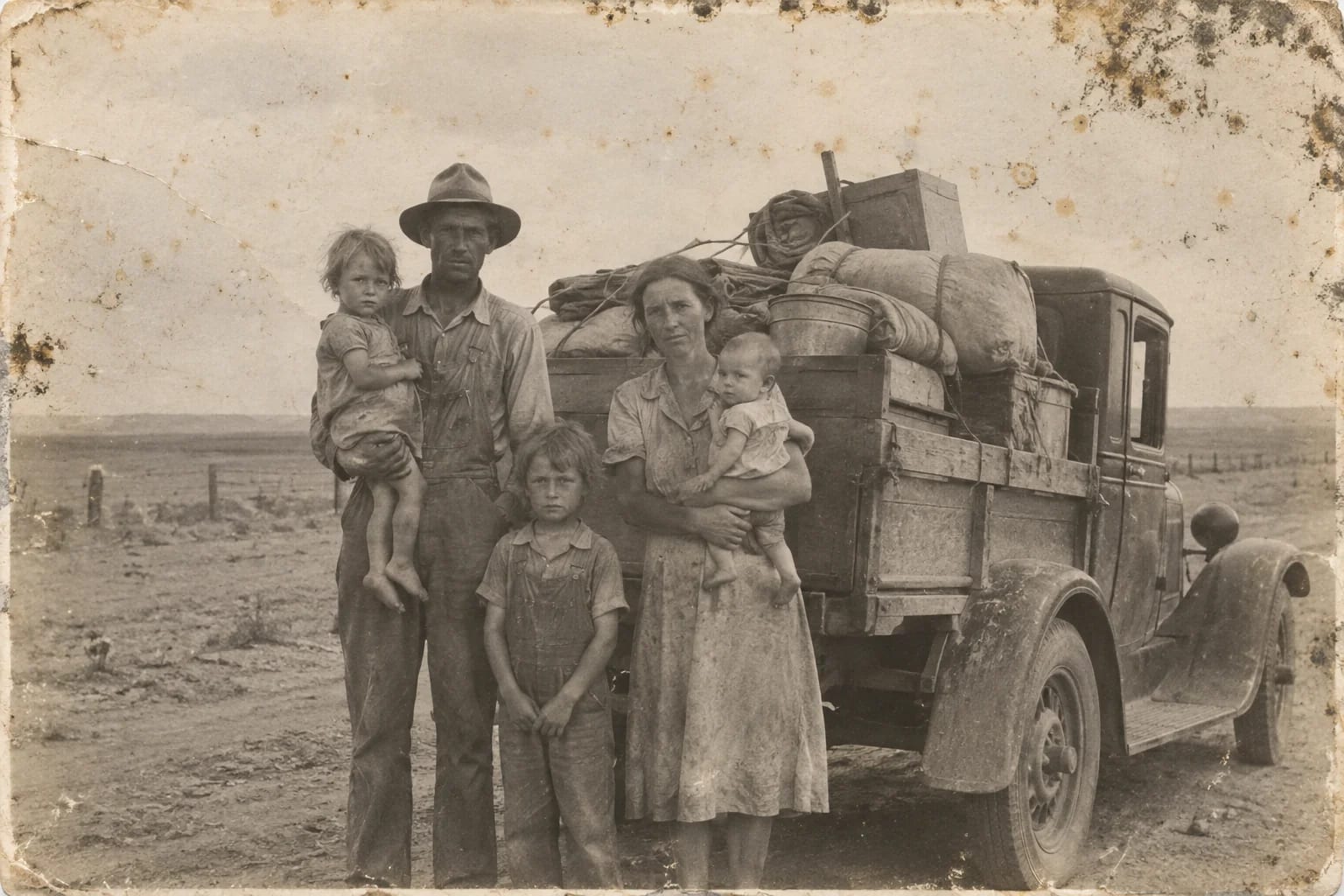
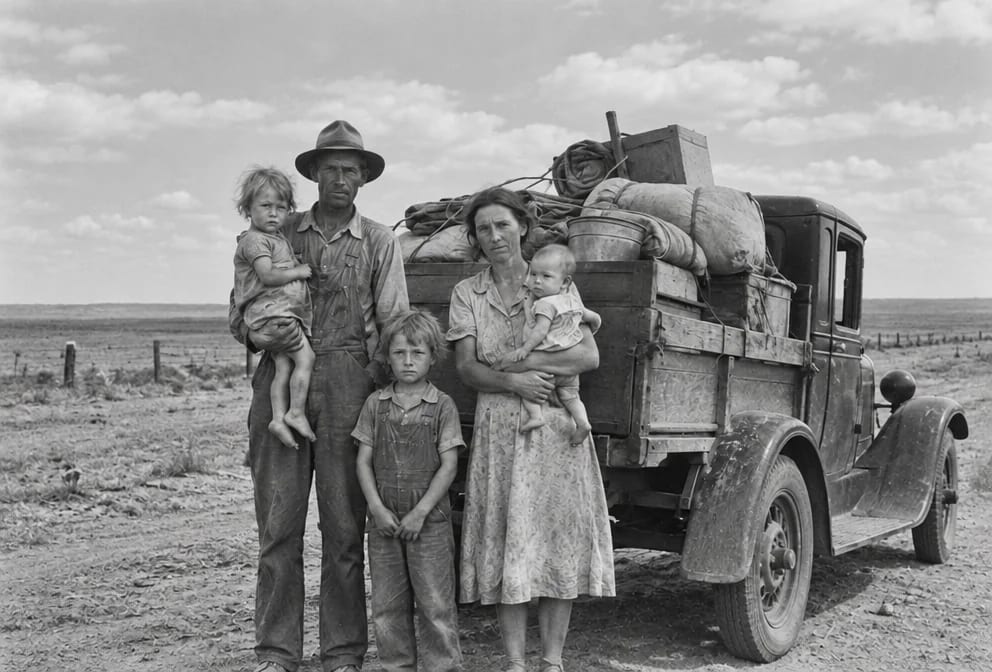
Original on the left, restored on the right; hover to see more of the repair. Made in the Studio from a scan of the print.
Print and file requirements
| Requirement | Detail |
|---|---|
| Dominant process | Roll film; silk and textured papers; Kodachrome from 1936 |
| Common formats | 616 and 620 contact print, studio portrait, Kodachrome slide |
| Color | Mostly monochrome; 35 mm Kodachrome from 1936 |
| Cameras | Kodak Six-16, Six-20, Argus A (1936) |
| Typical size | 2.5 x 4.25 in (616); 2.25 x 3.25 in (620) |
| Typical condition today | Silk-texture mesh on scans, glued into black albums, uneven Kodachrome fade |
What matters for these photos
- Silk-texture mesh on scans, glued into black albums, uneven Kodachrome fade on 1930s prints
- Faces in 1930s group and studio photos that are too small to enlarge
- 1930s tones drifted to brown or yellow, with the whites gone
- A single 1930s print that is the family's only copy, with no negative to go back to
Suggested order of passes
- 01
Run Grain & Noise Remover on the 1930s scan
Targets the most common failure of 1930s prints: silk-texture mesh on scans, glued into black albums, uneven kodachrome fade.
Grain & Noise Remover - 02
Repair the marks left on the 1930s print
A second pass for the scratches, creases and fading that 1930s prints usually carry together.
Photo Restoration - 03
Restore the faces
1930s faces are often small; natural strength keeps them soft and believable, strong rebuilds tiny ones.
Face Restoration - 04
Upscale for reprinting
2.5 x 4.25 in (616); 2.25 x 3.25 in (620) is small for a frame; the upscaler adds the pixels with the 1930s shape unchanged.
Image Upscaler
Questions
Related guides